Beeton Garage Door Co.Service bulletin 2 of 3
Belt-Drive Opener Repair: step by step
The visit runs in a set order.
New Tecumseth, Ontario · Garage Doors · open 24/7
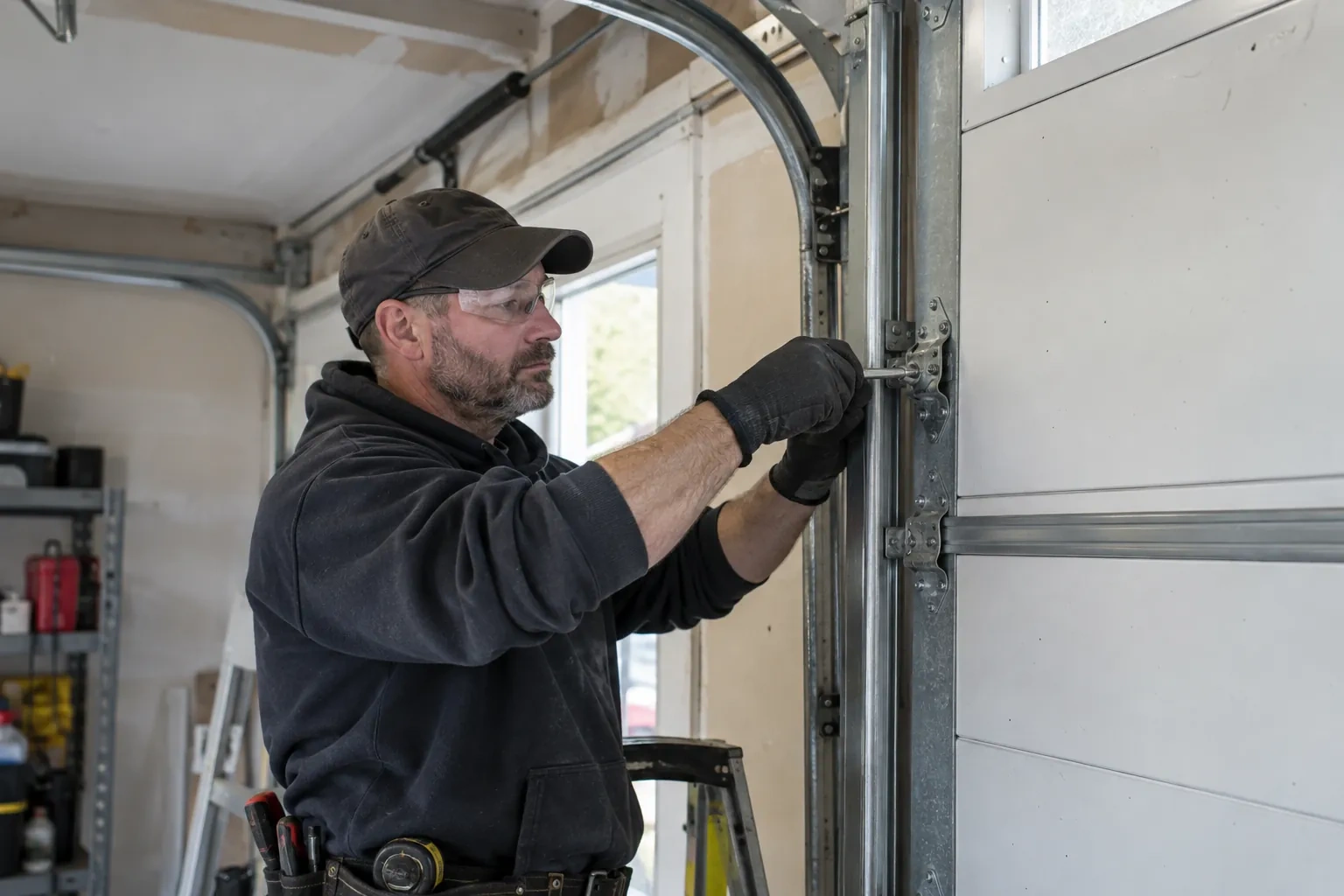
The visit runs in a set order. First the operator is unplugged and the door is released and lifted by hand, because the belt only guides a door the springs already carry; a heavy door is a spring job, not a belt job. Next the belt is examined along both runs, its tension checked at the trolley spring, and the sprocket, idler pulley, trolley and rail looked over. Then the repair itself: adjusting, or replacing the belt, trolley, pulley or gear kit. Finally the motor and trolley are put back in phase, travel and force are relearned, and the two reversal tests are run before the door is handed back.
Rail, joints and whatever is rubbing
A belt frays for a reason, and the reason is usually somewhere along the rail. The technician sights the rail from the header to the motor head for a bend, a sag where a hanger has loosened, or a joint between rail sections that has stepped out of line and is catching the belt teeth each pass. Marks inside the rail show where the belt has been touching. Storage racks, a bicycle hook or a truck's roof rack lifting the rail are frequent finds. A straight, true rail lets a belt run for years without touching anything, so any of these is corrected as part of the repair rather than left to wear the new belt.
Finishing the door around the belt
A belt drive is only as quiet as the door it moves, so the visit closes with the door hardware. Hinges, rollers and springs get a garage-door lubricant, cold-rated for a detached garage; the belt itself is wiped clean and left dry, because grease softens the rubber and packs the teeth with grit. Rail hangers are snugged, the manual slide lock is disabled so it can never be thrown against the motor, and the red release handle is confirmed to hang no more than about 1.8 m. The wall control is checked for height and the photo eyes for alignment, and the operator's cover goes back on.
How to check the belt by eye
You leave knowing what a healthy belt looks like from the garage floor. It runs level, just above or inside the rail, with no visible sag between the motor head and the header. Its teeth are even along the whole length and its edges are square, not fuzzy. Every few months, with the door closed, glance up and along the rail; then open the door and look again, since sag shows on the return run. If the belt begins to hang below the rail, slap on the way up or click at the same point each cycle, that is the moment to call, while it is a tension adjustment rather than a stalled door.